Welcome to Lawrenceville Bird Control: Prevention and Removal of Unwanted Birds
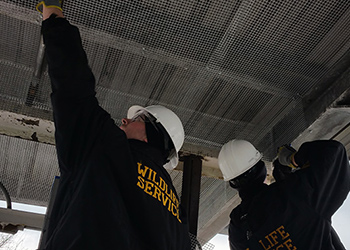
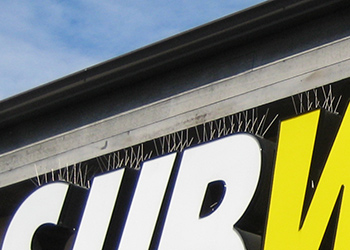
Our company specializes in resolving problems caused by birds in Lawrenceville, Georgia, both residential and commerical. We handle bird species such as pigeons, starlings, grackles, sparros, and even Canada Geese and woodpeckers. We generally don't kill birds - we prevent them from causing problems. Most commonly, this means that we install barriers that prevent them access to your building or property, or anti-roosting devices that prevent them from landing, nesting, or roosting on your home, store, building, or anywhere. We use netting, needle strips, shock track, and more. We do offer trapping in some cases, and removal of birds from warehouses, grocery stores, or other commerical or industrial buildings by netting or sometimes pellet shooting. We have a wide variety of tools and methods for solving every manner of bird problem. Call us at 470-222-7831 to discuss your bird problem today.Our Work
Full Range of Bird Control Services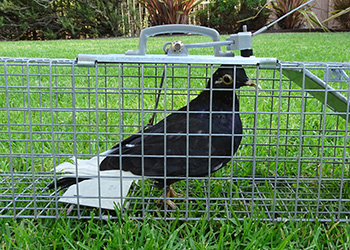
More About Us Lawrenceville Bird Control:
If you want your bird problem to be solved right the first time, you can be sure that we will always deliver. We guarantee that we will generously invest in our people to ensure that they will provide a better and faster solution to your bird invasion issue. Quality service will always be our no.1 priority. We also make certain that we will integrate the latest technology and updated scientific strategies to provide you with the finest bird removal and exclusion service. We believe that training our people is crucial for our company. We know how essential it is in ensuring that we would be able to solve the problem using the best available treatment. We understand how our technicians can provide you with a better bird control strategy if they are knowledgeable about the behavior and the biology of these flying creatures. Knowing the ideal place to live, how they forage their food, and their reproductive habits will help us learn how to determine the real cause of the problem. We will not just mitigate the symptoms of infestation but attack the source of the problem. With our founders' guidance and supervision, we will remain true to our company's core values; to deliver top quality service with integrity, respect, and reliability.Guide to a Pigeon's Natural Diet
My neighbor is an old lady who visits the park daily. She usually takes a bag of grains with her for the grand purpose of feeding the pigeons over there, who by now regard her as their benefactor and flock around her the moment she steps foot in the park. She takes a fistful of grains from the bag, scatters them on the ground and then steps back with the calm demeanor of someone who knows what's about to happen next. The pigeons gather around and start pecking away. It is a fascinating sight indeed.
Of course, pigeons love to eat. It is what allows them to defecate and leave their mark all over the city. Considering that these birds are tamed as pets and detested as pests in equal measure by us humans, it is important to understand their natural diet to deal with them appropriately.
Pigeons are granivorous birds, which means that grains and seeds are a staple of their diet. They prefer to eat cereal grains, corn, sunflower seeds, wheat, barley, millet, and peas. As it happens, this preference depends on the season to some extent. For instance, during the winter, they like to peck on oil-based seeds because this kind of diet helps them to stay warm.
Cereals
Consisting of 70% carbohydrates, 10% protein and 5-7% fats and other minerals, corns form a huge part of a pigeon's diet as they not only serve as a great source of energy, but they are also readily available.
Wheat, pulses, and peas
For pigeons living in or near grain farms, corn, pulses, and peas are easily available. Wheat is rich in carbohydrates, while legumes are rich in proteins as well as phosphorus and calcium salts. Peas are preferred because they are easily digestible and serve as great sources of proteins.
Oil-based seeds
During the winter season, pigeons will seek out and gobble up sunflower seeds, with the black oil variety being a definite hit among them. The reason is simple: these seeds are high in fats, which makes them an excellent winter dish.
Fruits and veggies
A pigeon's relationship with fruits and vegetables is slightly different from that of a human being's. They will certainly eat them, especially if they are chopped up, but there are a few varieties which they will avoid. Avocado, for instance, is reported to be potentially toxic for a pigeon, while pale vegetables like lettuce and celery offer little nutritional value.
Meet the scavengers
Pigeons which dwell in the city tend to scavenge for food throughout the day. It is not uncommon for them to feed on a piece of fried chicken lying on the pavement or peck on rotting berries in parks. In fact, they will taste everything you throw away, as long as it's edible.
Also read our other bird tip: Do Mothballs Really Work Against Pigeons?
We have the most experience in Lawrenceville at understanding the nuisance birds of Georgia. Our 7 years of experience in the field ensures excellent results.
We pride ourselves on the quality of our bird control work. Our work is professional grade and long lasting, usually for the life of the building.
We are fully Georgia licensed. We carry the correct safety equipment, and operate in a safe and professional manner to keep your building and people safe.
Call us at 470-222-7831 to discuss your bird problem and our process. We are always responsive by phone. We can usually schedule next-day appointments, and provide written estimates for all our bird work.
Thank you Lawrenceville Bird Control for keeping the pigeons off of my storefront. My sidewalks are clean now!
These guys were the only ones who could get a sparrow out of my clothing store. Thank you!
Your goose abatement program has kept my golf course dropping-free. I recommend Lawrenceville Bird Control.